
Many buyers want genuine leather appearance but cannot accept genuine leather pricing.
PU leather is a polyurethane-based synthetic leather that offers soft touch, rich texture designs, and lower cost than genuine leather.
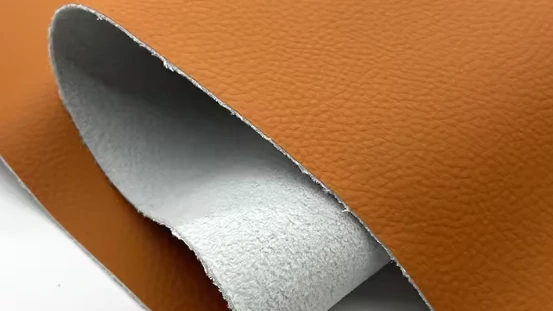
In my daily work with synthetic leather materials, PU leather is one of the most requested products from furniture factories, automotive interior buyers, and bag manufacturers. Many people call it polyurethane leather or artificial leather. Although it is not genuine leather, high-quality PU leather can achieve a very similar appearance and hand feeling. Compared with PVC leather, PU leather usually feels softer and more flexible. It also gives a more natural leather-like touch. This is why many customers prefer PU leather when they want products that look more premium but still need cost control.
What are the disadvantages of PU leather?
Many customers only focus on appearance and ignore long-term durability problems.
PU leather can crack, age, trap heat, and soften under high temperatures after long-term use.
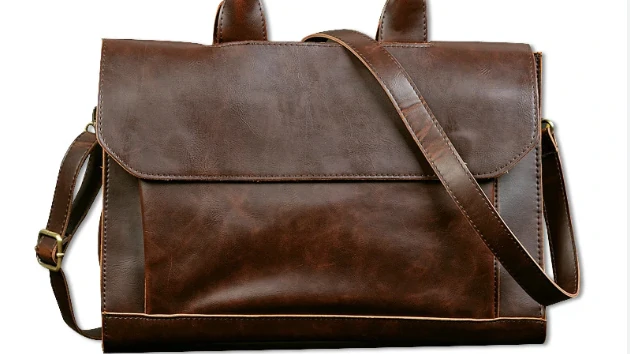
Why PU leather cannot fully replace genuine leather
From my experience, PU leather performs very well in many commercial applications, but it still has limitations. The biggest weakness is durability compared with genuine leather. After years of heavy use, some lower-grade PU leather may crack or peel. High temperatures can also affect PU leather performance because polyurethane materials soften more easily than natural leather. Another issue is breathability. Although PU leather is softer than PVC leather, it still does not breathe as naturally as animal leather. In hot environments, users may feel heat buildup after long sitting periods. Product lifespan also depends heavily on coating quality and environmental conditions. Poor-quality surface coatings usually age faster under sunlight and humidity.
| Disadvantage | Effect | Common Situation |
|---|---|---|
| Surface aging | Cracking or peeling | Long-term use |
| Poor breathability | Heat buildup | Hot environments |
| Weak heat resistance | Softening or deformation | High temperatures |
| Lower durability | Shorter lifespan | Heavy usage |
How is PU leather manufactured?
Most buyers see finished PU leather but never understand the production behind it.
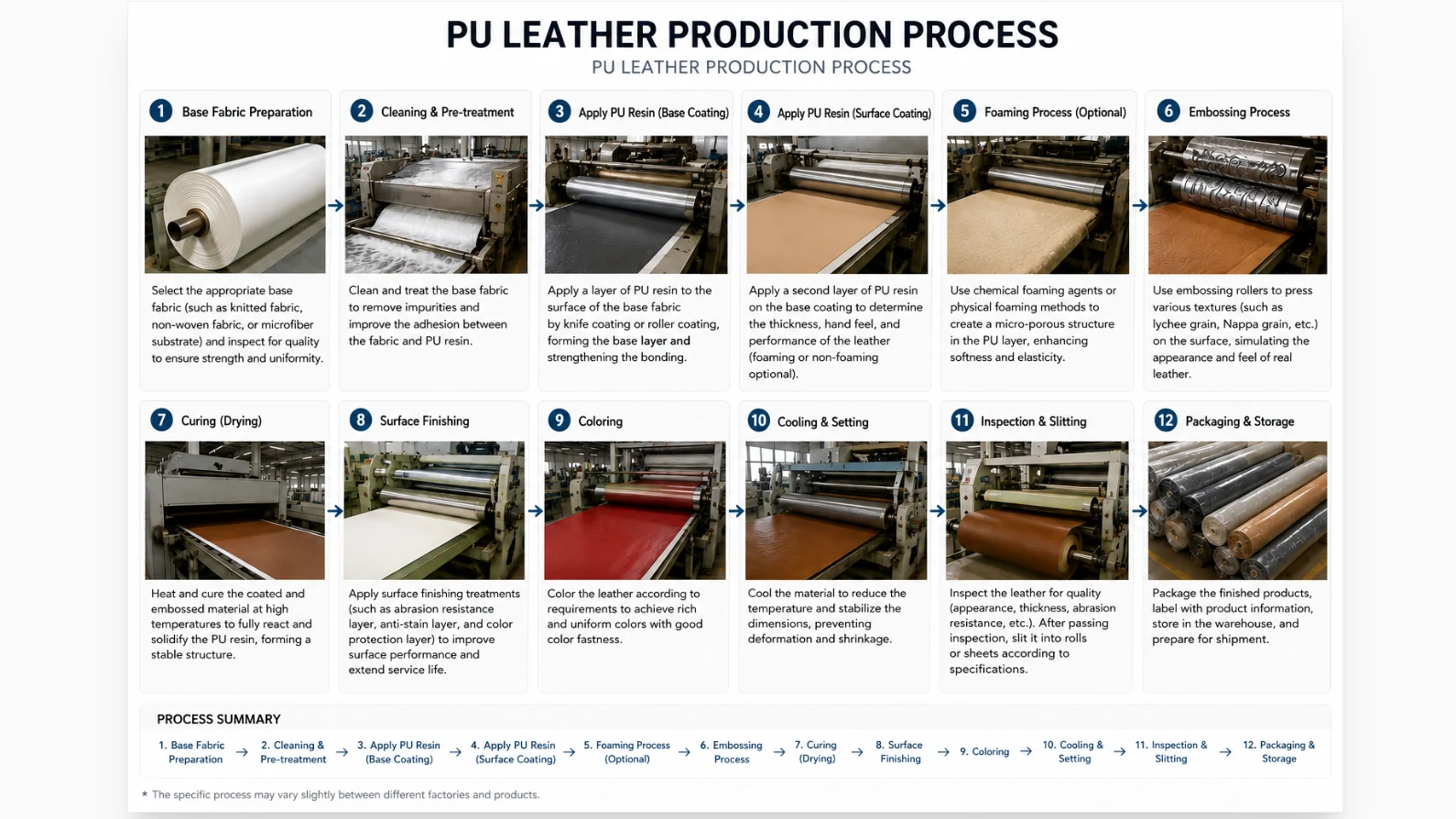
PU leather is produced by coating polyurethane resin onto fabric backing, followed by embossing, curing, and surface finishing.
The basic structure of PU leather
PU leather normally contains three main layers. The first layer is the fabric base layer. Manufacturers often use polyester fabric, knitted fabric, nonwoven fabric, or microfiber base materials. This layer provides strength and structural support. The second layer is the polyurethane coating layer. This is the core layer that determines softness, flexibility, elasticity, and abrasion resistance. The third layer is the surface finishing layer. Manufacturers add embossing textures such as lychee grain or napa grain, then apply coloring and protective coatings for scratch resistance and stain protection.
The PU leather production process
The production process usually starts with preparing the base fabric. Then manufacturers apply PU resin through knife coating or transfer coating technology. Some products use foaming treatment to improve softness, while others use dense coating structures for firmer performance. After coating, embossing rollers create leather-like textures on the surface. The material then goes through curing and drying processes. Finally, surface finishing treatments improve waterproof performance, stain resistance, and wear resistance. The combination of these steps allows PU leather to imitate many different genuine leather styles.
| Production Step | Purpose |
|---|---|
| Fabric preparation | Provide structure |
| PU coating | Create leather surface |
| Foaming treatment | Adjust softness |
| Embossing | Create leather texture |
| Surface finishing | Improve durability |
What is the main benefit of PU leather?
Many materials look attractive, but few balance appearance, softness, and cost effectively.
PU leather offers leather-like softness, rich texture options, lower cost, and flexible processing for many industries.
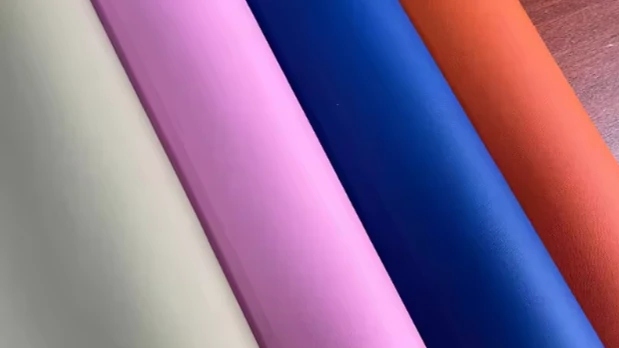
Why many manufacturers choose PU leather
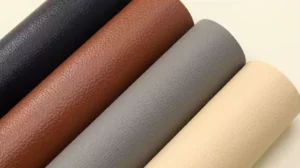
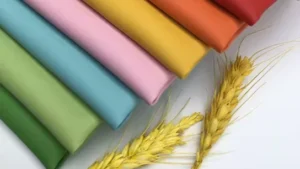
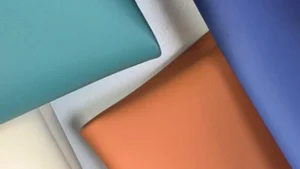
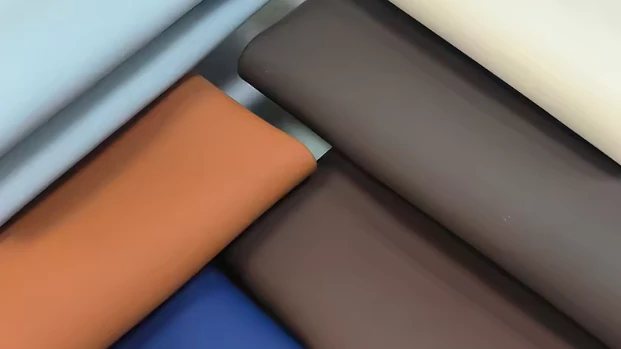
In my opinion, the biggest advantage of PU leather is balance. It offers a premium appearance while keeping production cost lower than genuine leather. Manufacturers can produce many surface textures such as lychee grain, napa grain, matte finish, and smooth surfaces. PU leather also supports many colors including black, brown, beige, white, and bright fashion colors. This flexibility makes it useful across different industries. Compared with PVC leather, PU leather usually feels softer and smoother. Many customers say high-quality PU leather feels closer to genuine leather during touching. PU leather is also easier to process during sewing, cutting, embossing, and sponge lamination. Because PU materials do not contain chlorine, many buyers also consider them more environmentally friendly than PVC materials.
| Advantage | Benefit |
|---|---|
| Soft touch | Better comfort |
| Leather-like appearance | Premium visual effect |
| Lower cost | Mass production friendly |
| Rich color options | Flexible design |
| Easy processing | Supports sewing and embossing |
What is the lifespan of PU leather?
Some PU leather products fail quickly while others remain stable for many years.
PU leather lifespan usually ranges from 2 to 10 years depending on material quality, environment, and maintenance.
What affects PU leather durability
From my experience, PU leather lifespan depends strongly on quality level and usage conditions. Ordinary PU leather commonly lasts around 2 to 4 years. Medium and high-end PU leather can often reach 4 to 8 years under normal indoor use. Microfiber PU leather may last more than 6 to 10 years because its structure is much stronger. Sunlight exposure, humidity, cleaning chemicals, and frequent friction all influence durability. Surface coating quality is also extremely important. Better coatings improve scratch resistance, stain resistance, and aging resistance. For furniture and automotive applications, choosing the correct thickness and coating system greatly improves long-term performance.
| PU Leather Type | Typical Lifespan |
|---|---|
| Ordinary PU | 2–4 years |
| Medium and high-end PU | 4–8 years |
| Microfiber PU | 6–10+ years |
In my work, I usually recommend PU leather to customers who want soft touch, leather-like appearance, flexible designs, and reasonable cost without choosing genuine leather.
Conclusion
PU leather combines softness, visual quality, and flexible processing, making it one of the most practical synthetic leather materials today.